October 22, 2026 · RestoFlo · South Florida
Sometimes—but only after checking the entire floor assembly, not just whether new mortar sticks to the old tile. For a dry bathroom floor, the existing tile must be sound, well bonded, clean, and suitable for the selected setting system. Plan the added height at the door, toilet, vanity, and shower transition. If tiles are loose, the substrate is wet or damaged, or a shower waterproofing assembly must be rebuilt, removal and repair may be the better scope. RestoFlo can help evaluate the bathroom remodeling plan in South Florida.
Why a bathroom is different from a general tile-over-tile project
The Tile Council of North America (TCNA) says installing ceramic tile over existing ceramic tile is done where floor height is not limiting and the old tile is well bonded. It points to Handbook details TR712 and TR713 and cautions that not every thin-set mortar bonds directly to tile. This is a conditional installation method, not permission to cover a failed floor.
A bathroom adds plumbing fixtures, wet-area transitions, and potential hidden moisture. Distinguish the main bathroom floor outside the shower from the shower floor and its waterproofing, slope, drain, and curb or curbless transition. Do not assume the same overlay detail works across both areas. For shower design, see our guide to waterproofing behind shower tile.
Our broader flooring-over-existing-tile guide covers general flooring decisions; this article focuses on the bathroom's wet-zone boundaries and fixture clearances. The kitchen backsplash tile-over-tile guide concerns a vertical wall surface, not a bathroom floor assembly.
Five checks before choosing an overlay
- Bond and condition: Have the installer check for loose, hollow-sounding, cracked, or shifting tile and assess the substrate below. A new surface cannot make an unstable base sound. TCNA notes that a bond test may help determine preparation on some tile surfaces.
- Moisture and prior leaks: Investigate stains, recurring dampness, soft materials, or known plumbing leaks before covering anything. If there is a leak history, use our water-under-tile guide as a separate diagnostic starting point; do not assume an overlay is a repair.
- Surface preparation and materials: The manufacturer must approve the specific primer or mortar, tile, and substrate combination. MAPEI's tile-over-tile system starts with clean, sound, well-anchored existing tile and repairs after damaged tile removal. Preparation is product- and condition-specific; do not casually grind old finishes yourself. TCNA warns abrasion can release harmful fine particles.
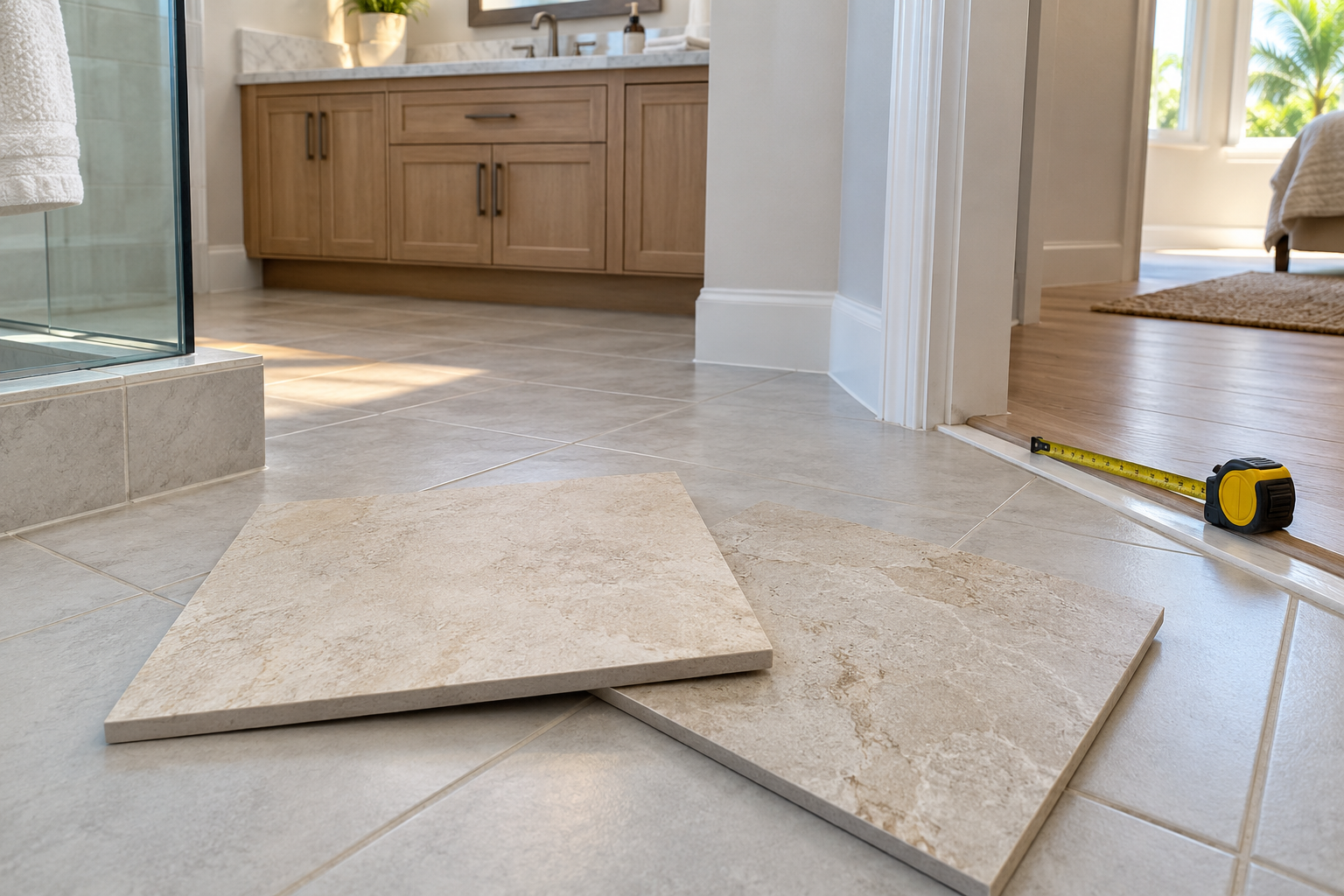
- Finished floor height: Measure the full build-up at the doorway, adjacent flooring, toilet flange, vanity toe-kick, door swing, and any accessible or curbless entry. Schluter's floor-system guidance highlights edge protection and transitions at thresholds. A small sample that looks acceptable in the middle of the room may fail at the door or plumbing fixture.
- Shower connection and approvals: If the project reaches the shower, have the installer document a compatible waterproofing and drainage assembly, not just a new tile layer. In a condo or HOA, confirm building rules, sound-control details, and approvals for the actual scope; local permit requirements depend on jurisdiction and work performed.
When removal may be the better remodel decision
Removal is worth comparing when a significant portion of the tile is loose or cracked, the floor is not adequately flat or stable, a leak or damp substrate must be addressed, the added height creates an unsafe or impractical threshold, or plumbing and waterproofing work already requires opening the assembly. The choice is not simply “save demolition” versus “spend more”: compare the documented prep, repair, transition, and wet-area scope of both options.
For a South Florida bathroom remodel, humidity makes it especially important not to conceal an unresolved moisture source. The material system, construction beneath the old tile, and site findings determine the appropriate method. A remodeler should coordinate the flooring installer and plumbing or waterproofing trades where necessary rather than guarantee a universal overlay.
What to ask for in a written assessment
Ask the remodeler to identify which tile is staying, what bond/substrate checks will be performed, the specific manufacturer-approved setting and waterproofing products, the finished height at each doorway and fixture, how perimeter and movement joints are handled, and what happens if hidden damage is found. Clarify whether the shower floor is excluded from the overlay or receives a separately designed assembly. Ask who checks local permit and condo/HOA requirements before work begins.
RestoFlo offers bathroom remodeling in South Florida. To discuss whether an overlay belongs in your project, call (754) 289-4815 or request a free assessment. The right answer follows a site-specific inspection and product selection, not a photo or a blanket promise.
Frequently asked questions
Can you tile over existing ceramic bathroom floor tile?
Possibly. The old tile and substrate need to be sound and well bonded, with an approved surface-preparation and mortar system. The added height and wet-area transitions also have to work. An on-site assessment is needed before selecting an overlay.
Can I tile over old tile inside the shower?
Do not treat the shower floor like the dry bathroom floor. Its slope, drain connection, waterproofing, and transitions must work as one compatible assembly. Have the qualified installer review the existing system and the proposed manufacturer detail; removal or rebuilding may be necessary.
Will a second tile layer make the bathroom floor too high?
It can. Account for the tile, setting materials, and any approved preparation or membrane at doors, adjacent flooring, toilet, vanity, and shower entry. Measure the complete proposed assembly before ordering materials.
Does new grout waterproof an old bathroom floor?
No. Grout and a new tile surface do not, by themselves, establish a verified waterproofing assembly or correct an existing leak. Identify moisture sources and design the appropriate wet-area protection before covering the floor.
Do I need a permit or condo approval for tile over tile in South Florida?
It depends on the jurisdiction, property, and exact scope—especially plumbing, shower waterproofing, or floor-assembly changes. Confirm requirements with the local building department and your condo association or HOA before starting; there is no single rule for every South Florida bathroom.