Published August 1, 2026 • By RestoFlo
Water damage restoration typically includes inspection and moisture mapping, stopping or coordinating repair of the water source, standing-water extraction, controlled removal of materials that cannot be saved, drying and dehumidification, cleaning, monitoring, documentation, and repairs when included in the scope. Not every loss needs every step; the plan depends on the water source, affected materials, access, contamination conditions, and verified moisture readings.
In South Florida, outdoor humidity, air-conditioning systems, concrete construction, and moisture trapped behind finishes can complicate what looks like a simple leak. The visible puddle may be only part of the problem. A professional assessment looks for water that has moved into wall cavities, flooring systems, cabinets, insulation, and adjacent rooms so the work plan follows the moisture—not just the stain.
Restoration is also different from a plumbing repair. A plumber may stop a broken supply line, while a restoration team addresses the materials and spaces that became wet. Roof, HVAC, appliance, electrical, or structural repairs may require other qualified trades. The project scope should state who handles each part and which work is included.
What does a water damage restoration company do first?
The first priority is understanding the source, the affected area, and any immediate safety concerns. The assessment may include a visual inspection, moisture readings, checking adjoining materials, documenting visible damage, and asking when the event started. If the source is active, it must be stopped or controlled before drying can succeed. Depending on the cause, that repair may be completed by RestoFlo or coordinated with the appropriate trade under the agreed scope.
If the water may involve sewage, outdoor flooding, electrical hazards, or a compromised ceiling or structure, avoid entering the area until it has been assessed. Do not assume clear-looking water is harmless or that a room is dry because the surface no longer feels wet. Conditions inside assemblies can be different from what is visible.
Step 1: Inspection, moisture mapping, and documentation
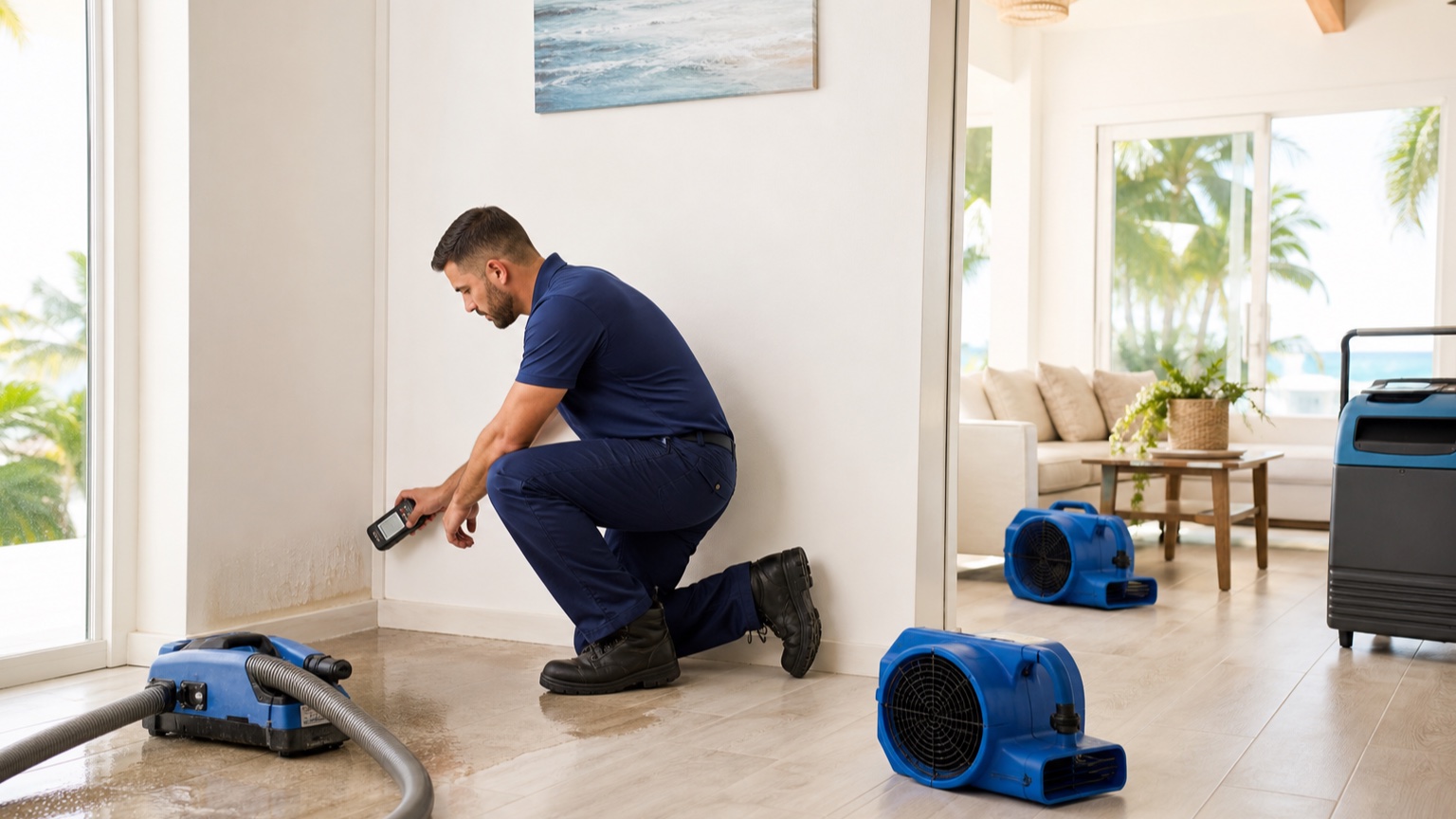
Moisture mapping establishes where water traveled and creates a baseline for the drying plan. Technicians may compare affected and unaffected materials, record readings, photograph conditions, and identify areas that need closer access. This information helps determine equipment placement, whether materials can remain, and what should be monitored during the project.
Documentation can also support communication among the property owner, restoration team, insurer, property manager, and other trades. It does not guarantee insurance coverage or payment. Coverage depends on the policy, cause of loss, exclusions, deductible, notice requirements, and the insurer’s decisions.
Step 2: Water extraction and source control
When standing water is present and the area can be entered safely, extraction removes as much liquid water as practical before structural drying begins. Removing bulk water can shorten the drying phase and limit further movement into porous materials. The exact equipment and method depend on the amount and source of water, flooring type, access, and the condition of the materials.
Source control happens alongside extraction. That may mean shutting off a supply line, addressing an appliance connection, coordinating a roof or HVAC repair, or preventing additional rainwater from entering. Drying equipment cannot overcome a leak that continues to add moisture.
Step 3: Decide what can be dried and what must be removed
Some materials can often be dried in place when conditions and measurements support that decision. Others may need controlled removal because they are heavily damaged, contaminated, delaminated, swollen, structurally unsound, or blocking access to trapped moisture. Drywall, insulation, carpet pad, engineered flooring, cabinets, and trim can respond differently depending on the water source and how long they remained wet.
A good scope explains the reason for removal rather than treating demolition as automatic. It should also identify protection for unaffected areas and contents, debris handling, access needs, and whether additional damage could be discovered after finishes are opened.
Step 4: Structural drying and dehumidification
After extraction and necessary removal, air movement and dehumidification may be used to move moisture out of wet materials and control the air around them. Equipment selection and placement should follow the actual drying conditions. South Florida humidity can slow evaporation when moist outdoor air enters the work area, so windows and doors should not be opened simply because more airflow seems helpful.
Drying is confirmed with measurements, not appearance alone. Readings should be checked as the project progresses and compared with suitable dry reference areas or project targets. Dense materials, limited access, moisture beneath flooring, wet cabinets, or recurring humidity can extend the schedule. For a deeper timeline, see RestoFlo’s guide to the drying and dehumidification process.
Step 5: Cleaning, odor control, and condition-specific treatment
Cleaning methods depend on the water source, the material, and the project conditions. The scope may include removing residue, cleaning salvageable surfaces, controlling odors, and addressing affected contents or assemblies. Products and procedures should be selected for the specific application; no single treatment replaces extraction, source control, material decisions, and drying.
Mold remediation is not automatically the same service as water-damage drying. If suspected mold or other contamination is found, the plan may need additional containment, material handling, cleaning, verification, or a separate remediation scope. Sensitive occupants with health concerns should seek guidance from a qualified healthcare professional rather than relying on a restoration article for medical advice.
Step 6: Monitoring and completion checks
Monitoring confirms whether the plan is working. The team may record moisture readings, adjust equipment, inspect newly accessible areas, and document changes in the scope. Equipment should not be removed only because a fixed number of days has passed; it should remain only as long as verified project conditions require.
Before the drying phase is closed, ask what was measured, what materials reached the project targets, whether any areas remain inaccessible, and what repair work is still pending. “Drying complete” does not necessarily mean the entire property is reconstructed or that every contents or insurance issue has been resolved.
Step 7: Repairs and reconstruction
Repairs may include replacing drywall, insulation, trim, flooring, cabinets, paint, or other finishes removed during mitigation. RestoFlo’s website presents restoration and repair capabilities, but the exact reconstruction work must be listed in the project-specific scope. Material availability, permits, specialty trades, inspections, and insurer decisions can affect the repair schedule.
Restoration, reconstruction, and remodeling should not be blurred together. Emergency work focuses on stopping damage and creating stable, dry conditions. Reconstruction restores affected finishes and assemblies under the approved scope. Elective upgrades are a separate remodeling decision and should be priced, scheduled, and approved separately.
What is not automatically included in water damage restoration?
A standard scope may not automatically include plumbing, roofing, HVAC, electrical, structural engineering, environmental testing, contents storage, hotel costs, permit fees, code upgrades, full-room remodeling, or every finish replacement. It may also exclude areas that were inaccessible or not known to be affected at the initial assessment. Ask for a written scope that identifies included work, exclusions, owner responsibilities, other trades, and how changes will be approved.
How long does water damage restoration take?
There is no single timeline for every loss. Extraction may be completed quickly when access is straightforward, while structural drying often takes multiple days and repairs may take longer. The water source, amount of water, affected materials, humidity, contamination, access, demolition needs, permits, weather, and reconstruction all influence the schedule. Ask for milestone-based updates rather than an unqualified completion promise.
Does homeowners insurance cover water damage restoration?
It depends on the policy and cause of loss. Sudden accidental water damage may be treated differently from long-term leakage, maintenance problems, floodwater, storm surge, or excluded causes. RestoFlo can document observed conditions and the restoration scope, but it does not determine coverage or guarantee claim approval. Notify the insurer promptly and follow the policy’s instructions while taking reasonable steps that are safe and appropriate to limit further damage.
When should you call RestoFlo?
Call when water has reached walls, flooring, cabinets, ceilings, insulation, or more than a small easily dried surface—or whenever the source, extent, or safety of the damage is uncertain. RestoFlo can assess visible conditions, map moisture, explain the likely restoration stages, and prepare a project-specific scope. Call (754) 289-4815 or request a free assessment through RestoFlo.com.
Frequently asked questions
What is the first step in water damage restoration?
The first step is to identify and control the water source, check immediate safety conditions, and map the affected materials. Standing-water extraction and drying should follow a scope based on the water source, access, contamination conditions, and measured moisture.
Does water damage restoration include mold remediation?
Not automatically. Prompt drying can reduce the conditions that support mold growth, but suspected mold may require a separate or expanded remediation scope with additional containment, material handling, cleaning, and project-specific verification.
Can wet drywall be dried, or must it be removed?
It depends on the water source, how long the drywall stayed wet, the extent of saturation, contamination, physical damage, insulation behind it, and whether trapped moisture can be reached. Moisture readings and site conditions should guide the decision.
Does water damage restoration include repairs?
Repairs may be included, but only the project-specific scope controls. Drywall, flooring, cabinets, trim, paint, and other finishes may require reconstruction after drying. Ask which repairs are included, excluded, or assigned to another trade.
How long does professional water damage restoration take?
There is no universal timeline. Extraction may be completed quickly, structural drying often takes multiple days, and reconstruction can take longer. Materials, humidity, contamination, access, permits, specialty trades, and insurer decisions can extend the schedule.
Will homeowners insurance cover water damage restoration?
Coverage depends on the policy and cause of loss. Sudden accidental damage may be treated differently from long-term leakage, maintenance issues, floodwater, storm surge, or exclusions. Documentation can support a claim, but it does not guarantee approval or payment.