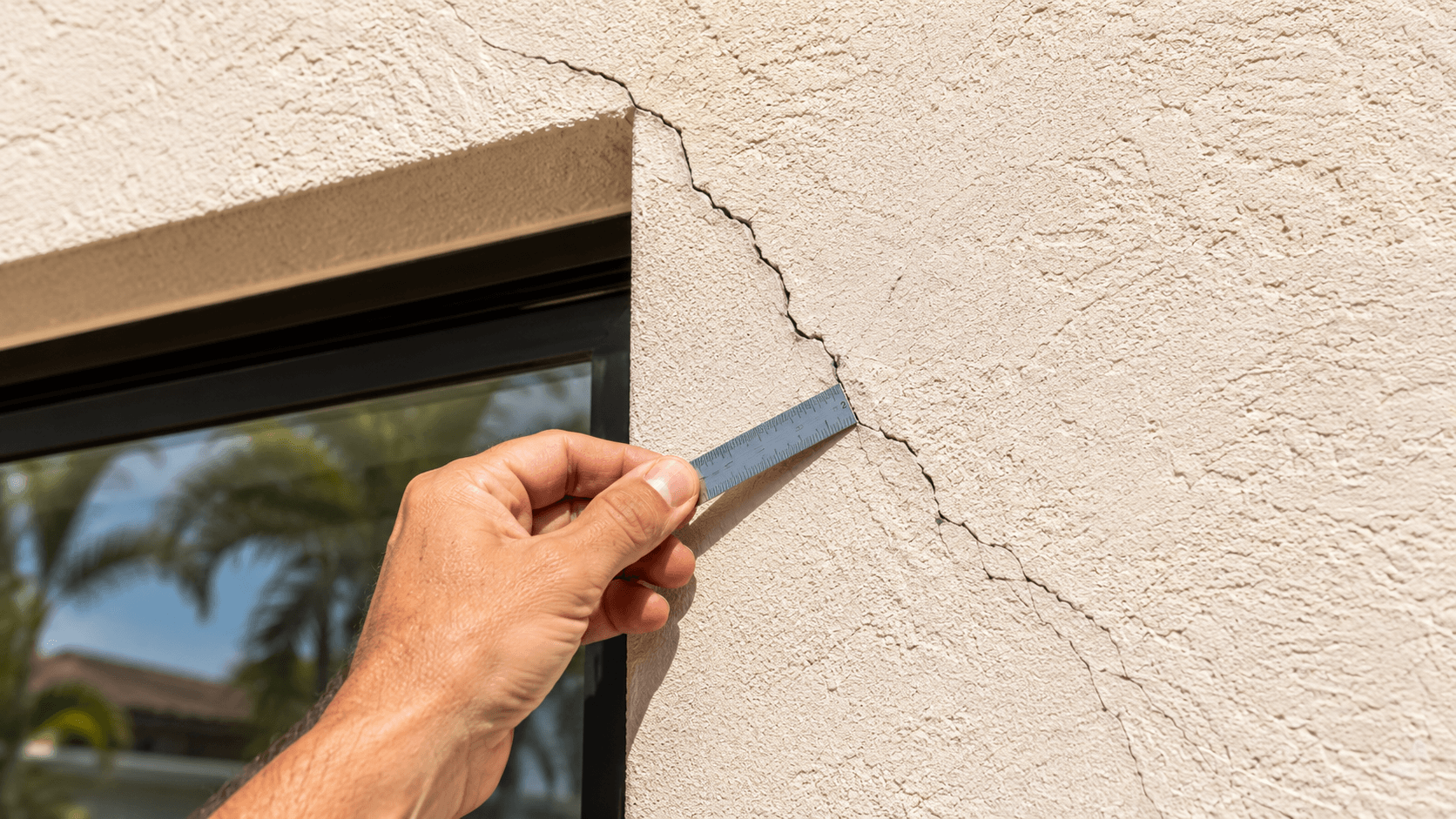
Stucco is the dominant exterior cladding on South Florida homes. It's well-suited to the climate when properly applied. But every stucco wall develops cracks over time — from thermal expansion, foundation settlement, vibration, hurricane wind loads, and ordinary aging. Most cracks are cosmetic. Some are not. The cracks that aren't cosmetic become the entry path for wind-driven rain, which finds its way behind the stucco, into the wall cavity, and eventually into the home's interior, where it causes slow, hidden water damage that becomes a mold problem before the homeowner ever sees a wet drywall surface.
This guide is for Miami, Fort Lauderdale, Boca Raton, and Palm Beach homeowners trying to figure out whether the cracks they see on their stucco are a problem, when to call a pro, what repair actually involves, and how to prevent future damage.
How stucco works (the brief version)
Stucco is a cement-based exterior coating applied over a substrate — usually wire lath over wood sheathing on framing, or directly onto concrete block. It has three layers: scratch coat (base), brown coat (leveling), and finish coat (texture and color). When properly applied with a weather-resistant barrier behind it (typically Tyvek or asphalt felt), stucco handles rain well. Drainage planes and weep holes allow water that does get in to escape. When the system fails — improperly applied, missing drainage details, or developing cracks — water enters the wall cavity and stays there.
The 6 types of stucco cracks
Not all cracks are equal. Identifying the type tells you the severity.
1. Hairline cracks. Less than 1/16 inch wide. Often in the finish coat. Almost always cosmetic. Common from thermal cycling.
2. Crazing or surface cracking. A network of small interconnected cracks, like a dried lake bed. Usually superficial finish coat issue from too-fast drying. Cosmetic.
3. Map cracking. Larger interconnected pattern spanning a wider area. Often indicates substrate movement. Worth monitoring.
4. Diagonal cracks (especially around windows and doors). Diagonal cracks from corners of windows and doors indicate stress concentration. These let water in if not addressed.
5. Vertical or horizontal structural cracks. Wide (1/8" or more) and running in straight lines often indicate foundation settlement or significant structural movement. Always worth professional evaluation.
6. Bulging or "drummy" stucco. Tap the stucco. If it sounds hollow over an area, the stucco has separated from the substrate. Water has been entering for a while and the bond has failed. Repair is significant.
How water gets behind stucco
Three primary entry points: through cracks — wind-driven rain in a hurricane (or normal heavy thunderstorm) drives water laterally into any crack wider than a hairline; around penetrations — wherever something penetrates the stucco (windows, doors, conduits, pipes, HVAC penetrations, light fixtures), failed caulking is one of the most common water intrusion paths; at the bottom of the wall — where stucco meets the foundation, missing or degraded flashing lets water wick up.
The Florida climate accelerates failure of all three: UV, heat cycling, salt air (coastal), and frequent driving rain.
The diagnostic process
A proper assessment includes visual exterior inspection (cracks, separations, bulging, caulking failures, suspect penetrations); a tap test (solid sound = bonded, hollow sound = separated); moisture meter readings on interior walls; thermal imaging from inside; test cuts in severe cases; and sometimes a water injection test (spraying water on the exterior in a controlled way to find the leak path). Most assessments stay non-destructive. The diagnostic produces a map of damage zones and recommended repairs.
The 4 repair categories
Category 1: Cosmetic crack repair. Hairline and surface cracks. Elastomeric crack filler, then repainted. $200–$1,000 for a typical home. DIY-able for hairline cracks.
Category 2: Stress crack repair with reinforcement. Diagonal stress cracks around openings. Crack opened up, fiberglass mesh embedded, new stucco patch applied, repainted. $1K–$3K typical.
Category 3: Section replacement. Drummy areas or significant separation. Affected stucco removed, substrate inspected and repaired, weather barrier replaced if damaged, new stucco in three coats. $3K–$15K depending on area.
Category 4: Full wall or facade replacement. Widespread failure. Often combined with substrate repair, framing replacement if rotted. $15K–$50K+.
Hidden interior damage scope
When water has been entering the wall cavity for months or years before discovery, the interior scope often includes wet insulation that has to be removed; mold growth in the cavity (Florida humidity); wet drywall removed (1 foot minimum, often more); rotted framing replaced; wet baseboards and flooring at the base of the wall. The exterior stucco repair is usually 30–50% of the total project cost. The interior restoration scope is the rest.
Insurance considerations
Florida homeowners insurance on stucco-related water damage: sudden damage from a covered storm (hurricane, named storm) is typically covered for both exterior and interior restoration; gradual damage from long-term water intrusion is typically not covered (maintenance); stucco repair itself is covered if storm-related, not covered if maintenance; mold from gradual intrusion is typically capped at the mold endorsement. The most contested item: was the damage sudden (storm) or gradual (maintenance)? Time-stamped photos of pre-storm condition help. Restoration company documentation of when the damage occurred helps.
Prevention checklist
Annually (or after major storms): visual inspection of all stucco walls; tap test on suspect areas; caulking inspection around all windows, doors, and penetrations; reseal failed caulking. Every 2–3 years: professional inspection by a stucco specialist or restoration company; pressure wash and inspect; touch up paint where finish has degraded. Every 5–10 years: repaint with elastomeric paint (bridges hairline cracks, adds waterproof layer); re-caulk all penetrations. Before any major storm: visual scan of obvious crack pathways; quick re-caulk of any suspect areas.
When to call RestoFlo
If you've identified stucco cracks plus interior water damage, suspect mold from long-term water intrusion behind stucco, or had a storm event that caused wind-driven rain through stucco cracks into your South Florida home, call us. We coordinate the structural and stucco repair scope with our trusted partners, perform the mold remediation under the IICRC S520 standard, document for your insurance carrier without AOBs, and rebuild. 24/7 emergency line: (754) 289-4815.