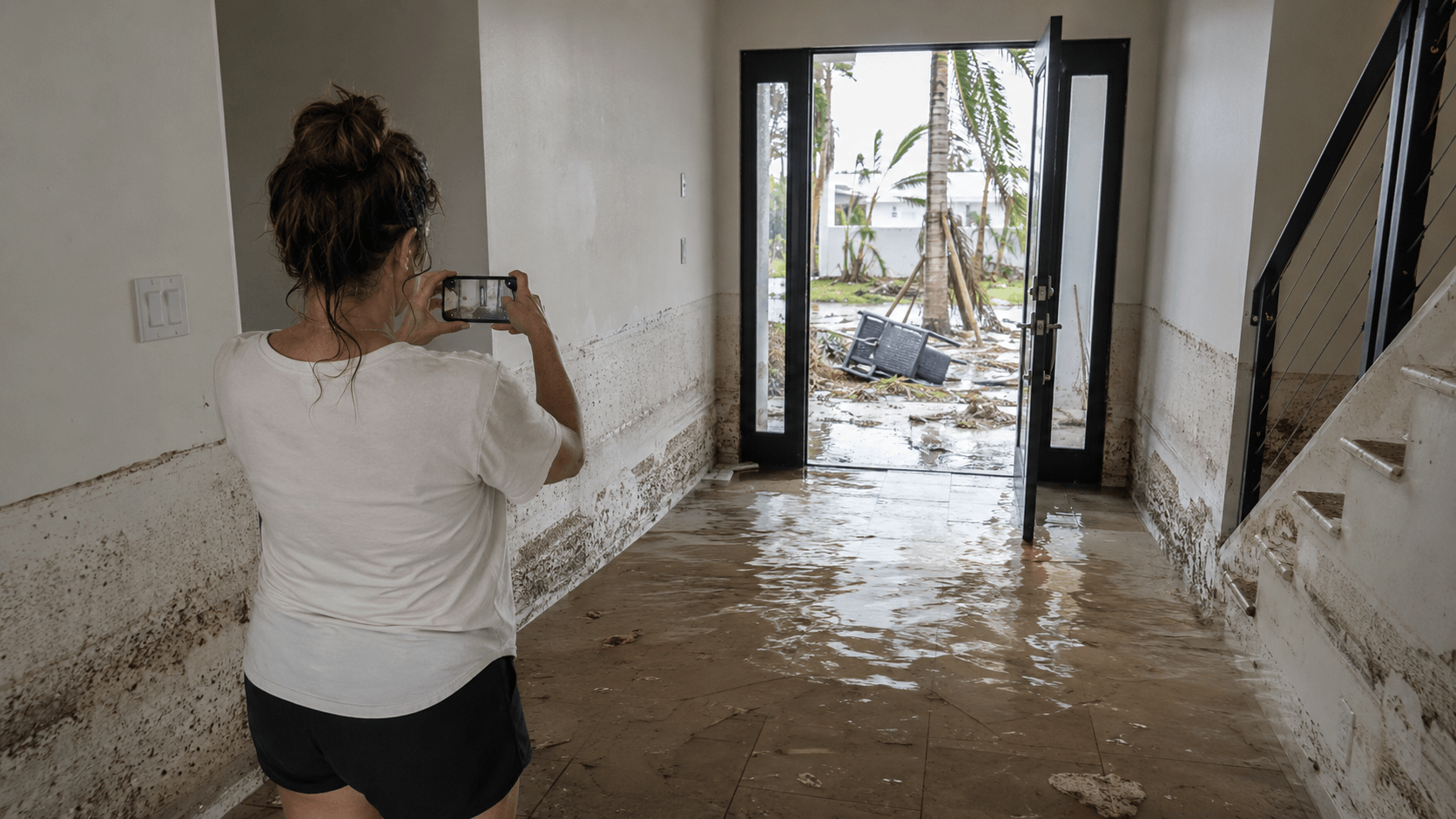
Two identical South Florida homes flooded by the same hurricane can end up with completely different insurance outcomes. One homeowner gets a full settlement and returns to their rebuilt home in six months. The other spends a year fighting the carrier, pays out of pocket for restoration, and still owes on the mortgage.
The difference isn't the amount of damage. It's whether the water that entered the home came from storm surge (rising ocean or bay water pushed inland by the hurricane) or wind-driven rain (rain water pushed horizontally through gaps in the roof, walls, doors, or windows). Standard Florida homeowners insurance policies cover wind-driven rain damage as part of the hurricane peril. They almost universally exclude storm surge and flooding — those require a separate National Flood Insurance Program (NFIP) or private flood policy.
This guide is for Miami, Fort Lauderdale, Boca Raton, and Palm Beach homeowners about to file — or already fighting — a hurricane insurance claim. Understanding the distinction can be the difference between $50,000 recovered and $50,000 denied.
The technical definitions
Wind-driven rain is rain water propelled horizontally by hurricane winds through openings the wind created or exploited: a torn shingle, a broken window, a stucco crack, a compromised weather seal, a soffit failure. The water source is precipitation. The entry mechanism is wind.
Storm surge is the abnormal rise of sea water generated by a storm, over and above the predicted astronomical tide. It moves inland from the ocean or bay, floods streets and yards, and enters homes at ground level. The water source is the ocean. The entry mechanism is flooding.
Why the insurance distinction matters
Standard Florida homeowners insurance (HO-3, HO-5, HO-6) covers wind and wind-driven rain damage from a named storm, subject to the hurricane deductible (typically 2%–5% of dwelling coverage). It excludes flooding of any kind, including storm surge.
Federal flood insurance (NFIP) or private flood insurance covers flooding, including storm surge. Maximum NFIP coverage: $250,000 for dwelling, $100,000 for contents. Private flood policies can be higher.
Homeowners without a flood policy who suffer storm surge damage receive zero from their standard policy for the flooding portion. Most South Florida homes need both.
The disputed middle ground
Disputes get intense when both perils hit the same home. A hurricane brings storm surge that floods the first three feet of the home, and also brings wind-driven rain that comes through a broken window on the second floor. Whose policy pays for what?
Insurance carriers use several methods to allocate damage: water line evidence (a visible water line 30 inches up the wall suggests storm surge to that height); debris patterns (storm surge deposits mud, sand, and salt residue; wind-driven rain doesn't); timing evidence (storm surge typically hits at peak of storm; wind-driven rain can start hours before landfall); structural evidence (surge affects lower elements; wind-driven rain enters through elevated openings).
What your policy actually says
Read your policy for these terms: hurricane deductible (2%–5% of dwelling coverage — on a $500K home, $10K–$25K); wind exclusion (some coastal properties have wind separated out); water damage from wind-created opening (standard policies cover damage from water entering through openings the wind created, as long as the wind created the opening); flood exclusion (almost universal); named storm deductible (sometimes different from hurricane deductible).
Documentation strategy for hurricane claims
The single most important thing you can do to protect your claim is document properly.
Before the storm: time-stamped photos of the home's condition, high-value contents, video walkthrough of every room, copy of policy. During the storm (if safe): photos of water entering, video with sound of wind, timestamps. Immediately after: photos of all damage before any cleanup; water lines on walls; debris patterns (mud, sand, salt residue = storm surge); exterior damage. When the adjuster arrives: walk through with documentation; point out water lines; note wind-driven rain entry points; have a restoration company present if possible.
Common denials and how they happen
"Damage caused by flood, not wind." Carrier determines storm surge caused the flooding. Standard policy pays only for wind-driven rain component. "Damage was pre-existing." Carrier claims water damage existed before the storm. Pre-loss photos win this dispute. "Damage from opening not created by covered peril." Carrier claims the entry point (crack, worn caulking) existed before the storm. "Maintenance issue." Carrier claims the roof was already deteriorated. "Duration." Whether damage happened during the storm or afterwards.
A homeowner with poor documentation almost always loses these disputes. A homeowner with strong documentation almost always wins them.
What flood insurance actually costs
Standard NFIP policy for a South Florida home: Preferred Risk (moderate-risk zones) $500–$1,500/year; Standard Policy (high-risk zones) $1,500–$5,000+/year; newly-mapped Zone A/V required by mortgage lenders. Private flood insurance sometimes costs less than NFIP and offers higher limits.
The typical South Florida homeowner within 5 miles of the coast should have flood coverage. Within 1 mile absolutely should.
What to do if your claim is denied
1. Get the written denial and understand the specific reason. 2. Get a restoration company's assessment. 3. Provide additional evidence — time-stamped photos, water line documentation, contractor statements. 4. Request re-inspection with a different adjuster. 5. File a complaint with the Florida Office of Insurance Regulation. 6. Contact a public adjuster (10–15% of settlement) or property insurance attorney (typically contingency).
When to call RestoFlo
If your South Florida home suffered hurricane damage and you're dealing with insurance claim complications — particularly disputes over storm surge vs. wind-driven rain — call us. We document the actual scope, provide restoration company assessments that support your claim, work directly with your insurance carrier (or your flood carrier, or both) without AOBs, and stay with the project through reconstruction. 24/7 emergency line: (754) 289-4815.