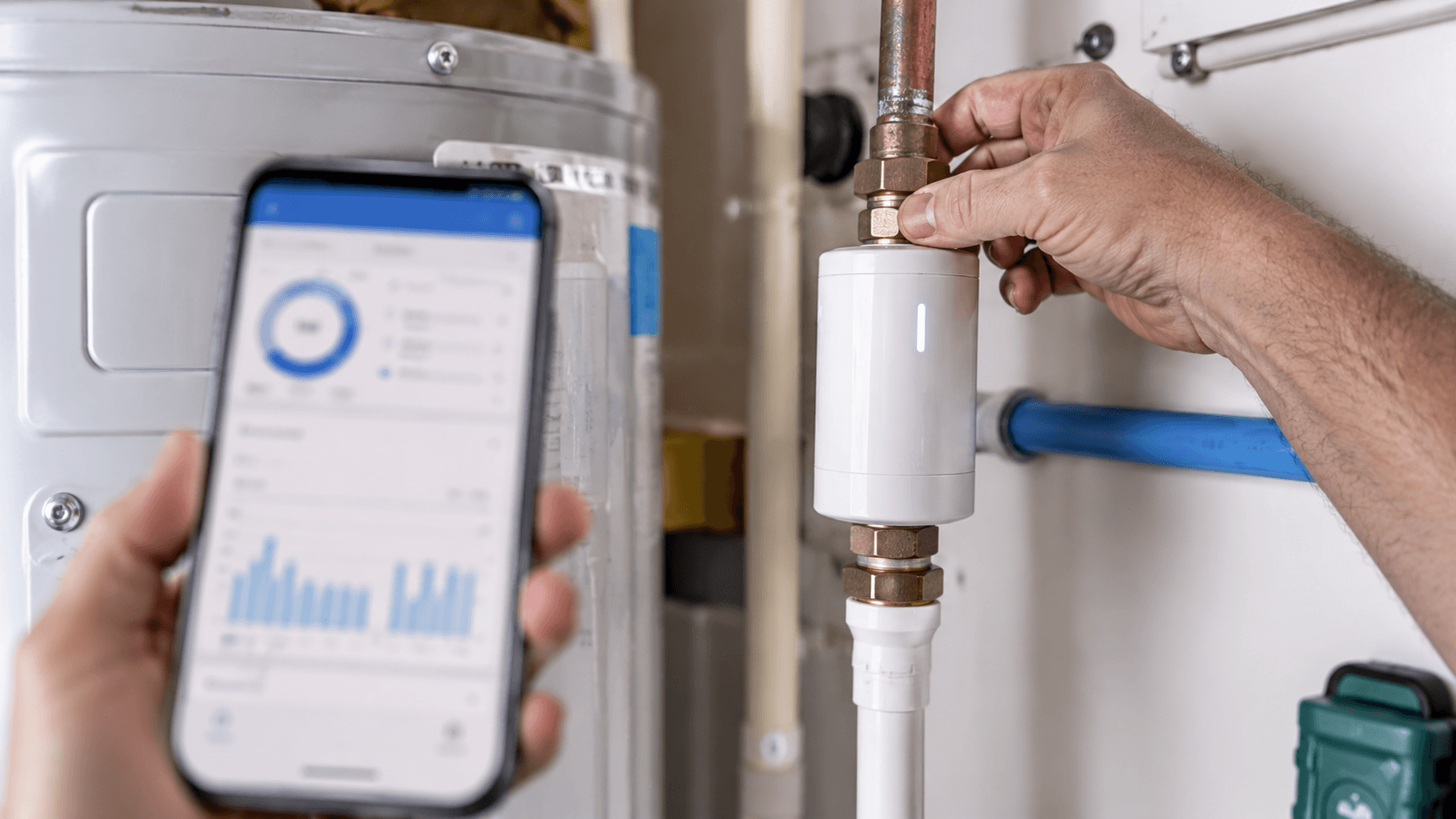
For a homeowner facing $2K–$30K in water damage repair costs, a $300–$700 smart leak detector pays for itself the first time it catches a leak. The trouble is sorting through a market of dozens of products — some that genuinely work, some that are gimmicks, and some that the homeowner installs incorrectly and forgets about until the leak has already happened.
This guide is for Miami, Fort Lauderdale, Boca Raton, and Palm Beach homeowners deciding whether to invest in smart leak detection, which system to pick, what installation actually involves, and how much premium discount (if any) their carrier will give them.
The two categories of smart leak detection
The market splits into two distinct categories. Point sensors are small wireless devices placed in known leak-risk locations — under sinks, near water heaters, behind toilets, near washing machines. They detect water on the floor and send an alert. Whole-home flow monitors with shutoffs are installed on the main water line, monitoring all flow into the home. They detect anomalous flow and can automatically shut off the water.
The two serve different purposes. Point sensors catch what you'd expect (a specific fixture leak). Whole-home monitors catch what you'd never know about (a hidden in-wall pipe, a slab leak, a slow drip in a wall cavity). For South Florida — where slab leaks and hidden pipe failures are common — whole-home monitors with shutoffs are usually the higher-value investment.
Whole-home monitor + shutoff products compared
Flo by Moen. ~$400–$500 device + $200–$400 install (plumber, requires cutting main). Flow monitoring, leak alerts, automatic shutoff, pressure monitoring, micro-leak detection. Most insurance carriers recognize it. Strong app. Reliable. Optional subscription. Subscription cost and app-only data are the downsides.
Phyn Plus. ~$700–$850 device + $200–$400 install. Acoustic plus flow monitoring (detects sound signatures), automatic shutoff, leak source identification. Sophisticated detection. More expensive, smaller market presence.
Streamlabs. ~$200–$300 device, often no shutoff in base model. Clip-on (no plumbing required) or inline depending on model. Flow monitoring and alerts only on base. Easiest installation, lowest cost. Base model doesn't shut off water.
LeakSmart. ~$500 device + $300+ install. Hub-and-sensor system that can include whole-home shutoff. Multi-zone shutoff, customizable. Custom for larger homes; more complex setup.
Point sensor systems
For homeowners who don't want a plumbing install, point sensors are simpler. Single-vendor systems (Govee, Resideo, Wyze) run $20–$50 per sensor + hub — reliable for the price, Bluetooth or WiFi. Smart-home integrations (Aqara, SmartThings) work with existing ecosystems at $30–$60 per sensor.
Place 6–10 sensors throughout the home: under every sink, behind every toilet, near water heater, near washer, near refrigerator, near AC drain pan. Cost ~$200–$400 total. Point sensors work well if you actually receive and respond to the alerts. Many homeowners install them, forget about them, and miss the alert when it matters.
The ROI question
For a typical South Florida home: risk of a major water leak event over 10 years is conservatively 1-in-3 (slab leaks, water heaters, washing machine supply lines, etc.) and closer to 1-in-2 for older homes (pre-1985). Average cost of a major water damage event is $15K–$50K in restoration, lost time, and contents replacement. Insurance deductible is $2,500–$10,000. Cost of smart leak detection system + install is $500–$1,500 one-time. Carrier premium discount is typically 5–10% on the water-damage portion of premiums when a recognized system is installed — $50–$200/year savings.
The math works heavily in favor of installation if the system is from a recognized vendor and properly installed. Even a 25% probability reduction in a $20K event is worth far more than the install cost.
What insurance carriers actually credit
Florida carriers are catching up to smart leak detection but vary widely: Citizens offers premium credit with documented installation of approved systems; State Farm has credit programs that vary by underwriting; Allstate credit programs vary; specialized HOI carriers (Universal, ASI) are limited but growing. The credit is usually modest (5–10%) but valuable. Documented installation also helps in claim disputes — proves the homeowner was proactive about maintenance.
Practical step: before installing, call your carrier and ask whether they recognize specific products and what documentation they want. Have the installer provide a certificate of installation.
Common installation mistakes
Installing the shutoff inline of only the cold water supply. The system should be on the main inlet, before any branching. Installing without a manual bypass. If the system fails, you need to bypass for repairs. Not testing the shutoff. After install, manually trigger the shutoff. Test again 6 months later. Not configuring the alert thresholds. Default flow thresholds may not match your usage. Adjust. Putting point sensors where the leak doesn't actually reach first. A sensor at the back of a deep cabinet may miss a leak pooling at the front. Ignoring app alerts. Set up SMS or email notifications, not just app push.
Post-install: what to do
The first month: monitor the data. Verify normal flow patterns. Look at the dashboard daily. Months 2–6: occasional check-ins. Annual: test the shutoff manually. Confirm battery (for systems with battery backup). Update firmware.
When smart leak detection won't help
A few scenarios where the system can't or won't catch the problem: slow micro-leaks that don't trigger the flow threshold (some products handle this better than others); drip into a wall cavity that doesn't reach the floor — sensors won't detect it; roof or window-driven water intrusion — different problem; sewer or drain backup — different system (wastewater, not supply line). The system is part of a broader water-management strategy, not a complete solution.
When to call RestoFlo
If you've experienced a water event in your South Florida home and your smart leak detection system either failed to catch it or alerted you in time to limit the damage, call us. We document the event, mitigate immediately, work directly with your insurance carrier under your direction (no AOBs), and rebuild. 24/7 emergency line: (754) 289-4815.