A persistent sewer or sulfur smell in a South Florida home isn't just unpleasant — it's a signal that something in the plumbing system isn't working correctly. The smell shouldn't be there. The fact that it is means sewer gas is escaping into your living space, and that gas carries health, fire, and property concerns.
Sewer gas contains hydrogen sulfide, methane, ammonia, and carbon dioxide. At low concentrations it's mostly an odor problem. At higher concentrations it's a health hazard. And in the long run, the underlying plumbing issue causing the smell is often connected to bigger problems like cracked drain pipes or compromised vent systems.
This guide is for Miami, Fort Lauderdale, Boca Raton, and Palm Beach homeowners trying to diagnose where a sewer smell in their home is coming from and what to do about it.
How plumbing systems should keep sewer gas out
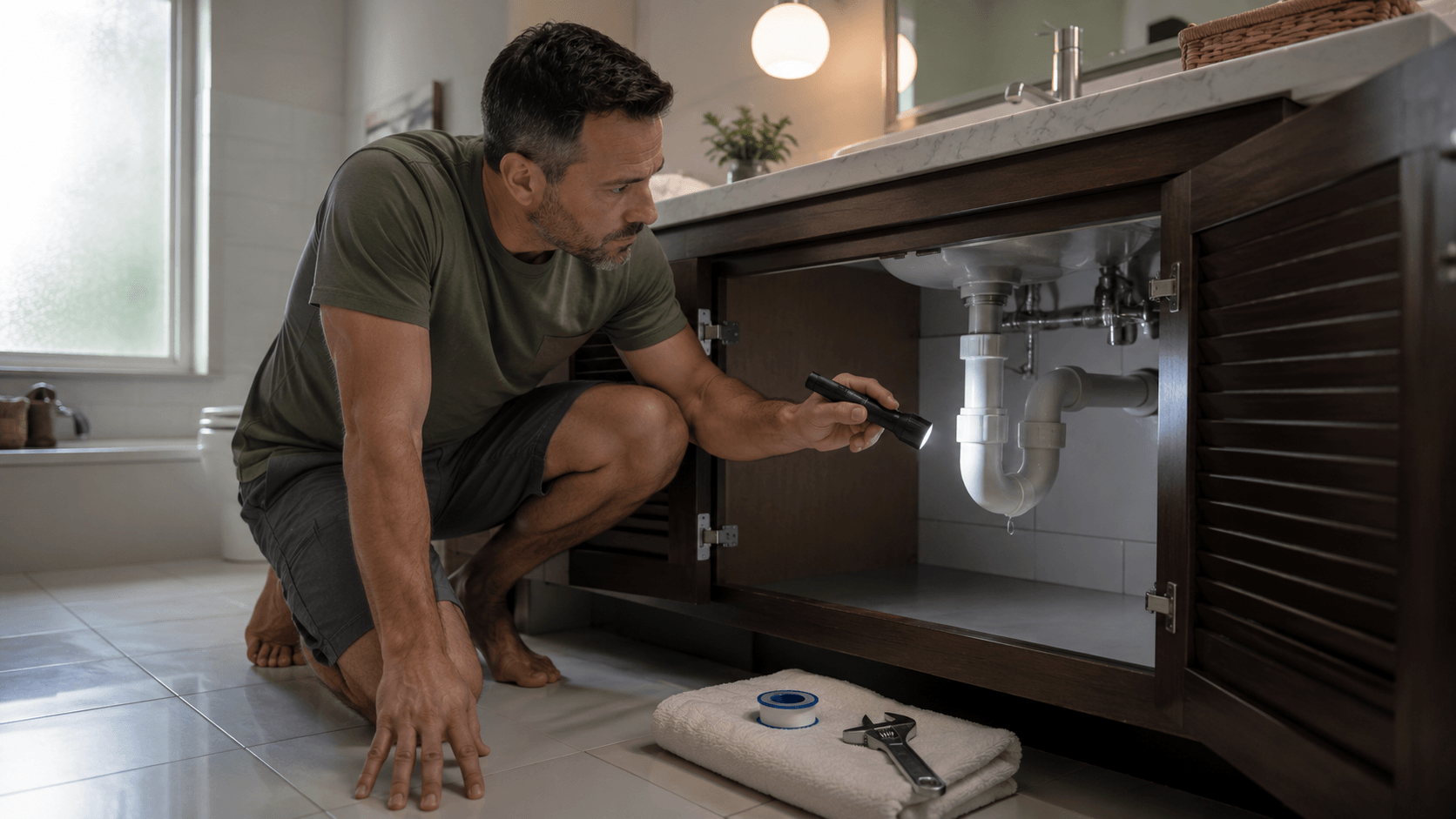
A working plumbing system has two protections against sewer gas entering the home. P-traps — the curved section of pipe under every drain that holds water creating a seal against gas coming up the drain. Vent stacks — pipes that extend from the drain system up through the roof, allowing air to enter the system as water drains and preventing suction that would otherwise pull water out of P-traps.
When both work, water in P-traps blocks sewer gas from entering rooms, and vent stacks ensure the traps stay full. When either fails, gas enters the home.
The 7 most common causes
1. Dry P-trap. A drain that hasn't been used in a while (guest bathroom, floor drain in a garage, basement floor drain) lets its trap water evaporate. With no water seal, gas comes through. Common in South Florida because evaporation is fast.
2. Damaged or cracked P-trap. Physical damage. Gas leaks through the crack.
3. Improperly installed P-trap. Missing entirely (some older homes don't have them on every fixture), or installed too far from the fixture and the trap arm is too long.
4. Vent stack blocked. Leaves, debris, or a bird's nest in the vent stack opening on the roof. Without venting, water gets sucked out of traps.
5. Damaged vent stack. Cracked, separated at a fitting, or improperly terminated.
6. Cracked or broken drain line. Beneath the slab or in a wall, gas escapes through the crack and finds its way into the living space.
7. Wax ring failure (toilet). The wax ring that seals the toilet to the closet flange allows gas to escape around the toilet base. Often accompanied by water at the base.
A few others, less common but worth knowing: sewer ejector pump failure (in basement or low-elevation installations); sewer cleanout cap missing or broken; backflow valve failure.
The 8-step diagnostic checklist
When you smell sewer gas, work through these in order.
1. Localize the smell. Walk through the house. Where is it strongest? Bathrooms, kitchens, laundry room, garage? The location often points at the source.
2. Check every P-trap for dry traps. Run water in every drain in the house. Run water for 30 seconds. Wait an hour. If the smell goes away, you had dry traps.
3. Look at the toilet base. Wax ring failure leaves visible signs — water staining, rocking toilet, sewage smell strongest at the base.
4. Check sink drains for visible cracks or separations. Open the cabinet under sinks. Look at the P-trap. Look at the drain line into the wall.
5. Check the floor drain in your laundry room or garage. Often has a dry trap because it's rarely used. Pour a quart of water into it. Smell improvement?
6. Sniff at AC supply vents. If gas is in the wall cavity, it can be pulled into the AC return system and distributed via supply vents. Strong sewer smell at vents suggests the source is in a wall.
7. Check the roof vent stack visually if accessible. Look for obvious blockages, animal nests, or damaged caps.
8. Use a smoke test if DIY diagnostics don't find it. A plumber introduces non-toxic smoke into the drain system. Wherever smoke escapes is where gas is escaping. Definitive diagnostic.
Quick fixes for common causes
Dry P-traps: pour a quart of water into every infrequently-used drain monthly; pour a tablespoon of mineral oil after the water to slow evaporation. Damaged or improperly installed P-trap: replacement is a plumber job ($150–$400 typically); DIY for accessible sink traps if you're handy. Wax ring failure: pull and reset toilet with new wax ring ($150–$400 plumber); if subfloor is also damaged, restoration scope adds. Roof vent blockage: plumber clears with snake or auger ($150–$400 typical). Cracked drain line in wall or under slab: diagnosis with sewer camera ($300–$500); repair scope highly variable — spot repair might be $1K–$5K; full pipe replacement could be $10K–$30K+.
When the smell points at bigger problems
A few patterns that suggest more than a simple fix. Smell that doesn't localize often means gas is escaping into a wall cavity or under the slab and being distributed by HVAC. Smell that returns after fixing a P-trap or vent suggests the underlying source is somewhere else. Smell + slow drains throughout the home suggests main drain line issues. Smell + water staining on lower walls or floors suggests a drain line leaking into the structure. Smell in older homes (pre-1985) with original cast iron drains — cast iron failure can cause both leaks and gas issues.
In any of these scenarios, the next step is a professional sewer camera inspection ($300–$600) to map the drain system condition.
Health considerations
Sewer gas at low concentrations can cause an unpleasant smell, headache, dizziness, nausea, and eye and throat irritation. At higher concentrations, it can cause drowsiness, confusion, respiratory distress, and potential fire risk (methane is flammable).
If anyone in the home is experiencing significant symptoms — headache, nausea, dizziness — that improve when they leave the house, take the issue seriously. Ventilate the home, identify the source, and address it. If symptoms are severe, leave the home and consult a doctor.
When the smell + restoration overlap
A few scenarios where sewer smell connects to a water damage restoration scope: wax ring failure with subfloor damage (water at the toilet base has rotted the subfloor; scope includes pulling the toilet, demolition of subfloor, drying, antimicrobial, replacement); cracked drain line in slab (water and contamination escaped into the slab and surrounding soil; scope includes demolition to access, decontamination, drying); cast iron failure under slab (long-running pattern with both water and gas issues, often discovered when the smell drives the inspection); sewer backup (Cat-3 event) — beyond a smell issue, actual sewage in the home.
For any of these, the sewer issue itself is a plumber call, and the resulting structural and contamination damage is a restoration call. Both work together.
Insurance considerations
Florida homeowners policies on sewer gas issues: damage from a sudden plumbing failure (cracked pipe, failed wax ring) is typically covered for the resulting damage; the plumbing repair itself is typically not covered; mold from a long-running gas/water leak is typically capped at the mold endorsement; sewer line replacement for old cast iron or aged systems is typically not covered (treated as maintenance).
The most disputed item is whether the source was sudden or gradual. Documentation matters — when you first noticed the smell, what you did, photos of damage.
When to call RestoFlo
If you've discovered sewer gas in your South Florida home and found that the source is connected to water damage, subfloor rot, or potential mold growth, call us. We coordinate with plumbers on the source repair, perform the structural restoration, decontaminate any Cat-3 water issues, and rebuild. We work directly with your insurance carrier. 24/7 emergency line: (754) 289-4815.