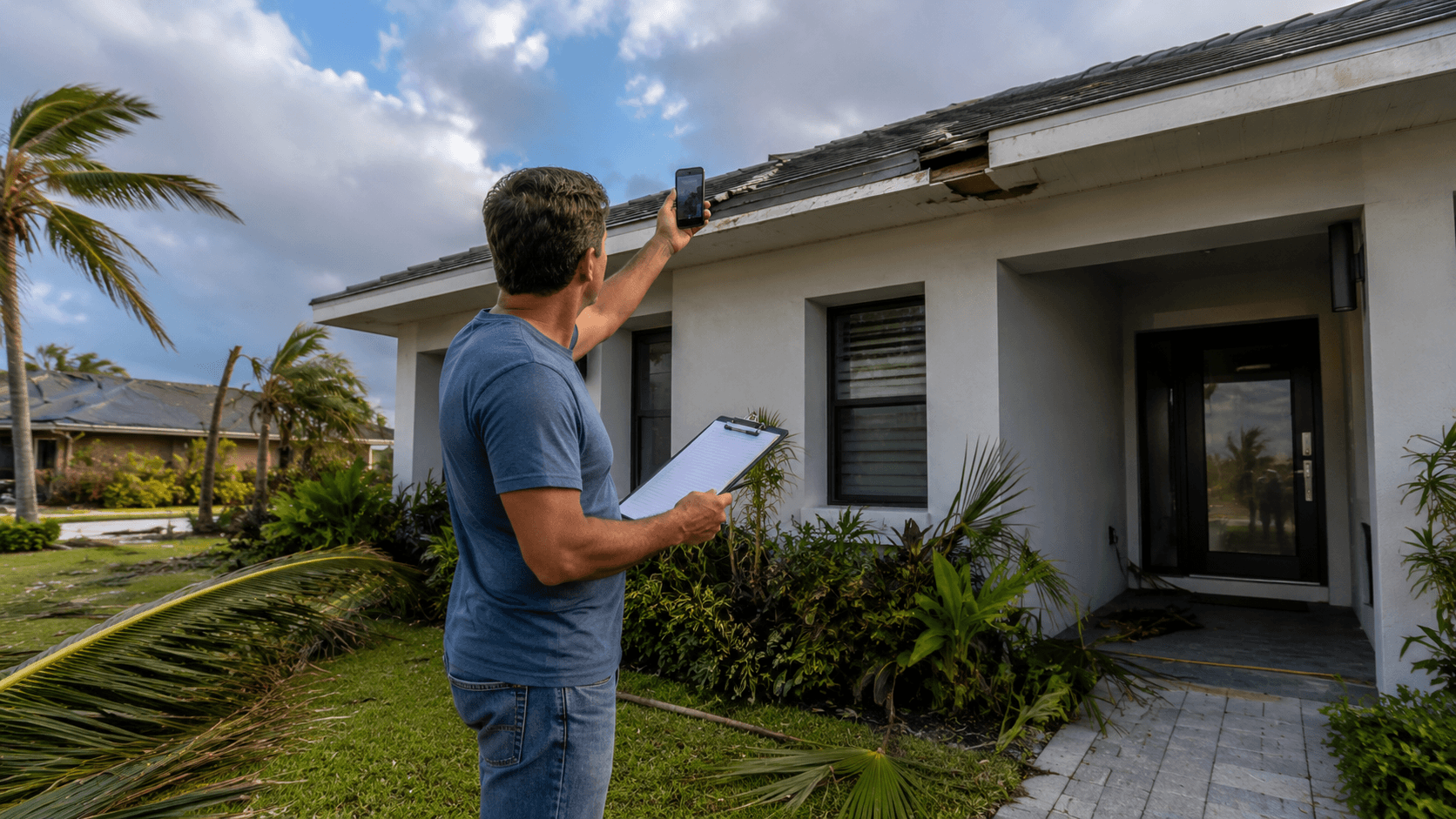
The first 24 hours after a hurricane are the highest-leverage hours in your insurance claim. What you document, what you mitigate, and what you fail to notice all show up in the final settlement. A homeowner who walks the property systematically with a phone camera and a checklist will recover materially more from the carrier than one who waits a week for an adjuster to discover everything.
This guide is the 14-point post-storm walkthrough we give South Florida homeowners — Miami, Fort Lauderdale, Boca Raton, and Palm Beach — to do themselves in the first 24–48 hours. It's designed to find hidden damage before it becomes structural rot, mold growth, or a denied claim.
Safety first: 5 things to check before stepping outside
Carbon monoxide — has someone been running a generator and where is it located? Generators in or near the house are the leading cause of post-hurricane deaths. Generator outside, 20+ feet from windows. Downed power lines — stay 25+ feet away. Even if they look de-energized, assume they're live. Call the utility. Standing water — step into puddles only after confirming no live electrical lines are in them. Obvious structural damage — roof partially collapsed, wall leaning. Stay out and call a structural engineer. Gas smell — sniff at the meter and around appliances. If you smell anything, leave the home and call the gas company from outside.
The 14-point walkthrough
Work outside → exterior shell → interior, top down.
1. Roof — from the ground. Walk around the home. From the ground, look up. Note missing or lifted shingles, exposed underlayment, damaged ridge, damaged flashing around chimneys and vents, debris on the roof, sagging or impacts. Photograph everything. Don't climb onto the roof yourself.
2. Soffits and fascia. Look at the underside of the roof overhang. Missing or damaged soffits indicate wind got under the roof — often a sign of larger damage above.
3. Gutters and downspouts. Damaged, separated, or full of debris. Clogged gutters during a storm cause water to back up and pour over into siding and windows.
4. Walls and stucco. Walk the perimeter. Note stucco cracks (especially around windows and door frames), staining, separated joints. Wind-driven rain finds every hairline crack.
5. Windows and sliding doors. Examine every window from outside, then inside. Cracked or broken glass, broken frames, water staining on the interior side, gaps in caulking.
6. Doors. Check every exterior door. Damaged frames, broken handles or locks, gaps in the threshold, water staining at the base. Garage doors are particularly common failure points.
7. Pool and pool deck. Water level, debris in the pool, screen enclosure damage, deck damage, equipment damage. (See our dedicated pool hurricane prep post.)
8. Landscaping and trees. Down trees, broken branches, root ball lifting, plants in pool, debris in yard. Trees leaning toward the house need professional removal.
9. Fences and outbuildings. Sheds, fences, garage doors. Wind damage to outbuildings is common and often covered by the insurance policy as "other structures."
10. AC and HVAC equipment. The outdoor condenser unit. Blown debris that hit the fins, water in the electrical box, condensation lines pulled loose, unit shifted on the pad.
11. Inside — ceilings throughout. Walk every room. Look up at every ceiling. Water stains, sagging, cracks, drywall separations from wall joints. Water from a roof breach takes 24–48 hours to show on the ceiling — check daily for the first 3 days.
12. Walls and trim. Walk every room. Look at the base of walls (where leaks settle), around windows, around doors. Wet drywall, peeling paint, separations from trim.
13. Floors. Walk every floor. Carpet should feel dry (run hands over it). Hard floors near walls should be checked for wicking or warping. Tile grout for cracks.
14. Attic. If accessible safely (no electrical hazards), peek into the attic with a flashlight. Daylight (roof breach), wet insulation, water on rafters, displaced or damaged ductwork. Daylight visible means an immediate professional roof inspection.
What to photograph
For every observation: a wide shot showing location and context; a medium shot showing the damaged area clearly; a close-up showing the specific damage; date/time stamp on the photo (most smartphone cameras do this automatically). The goal is that a carrier reviewing six weeks from now can identify the location, severity, and that the damage was storm-related.
What to mitigate immediately
Florida policies require "reasonable steps" to prevent further damage. The carrier will not pay for damage that worsens because you didn't mitigate.
Tarp the roof if a breach is visible — yourself (carefully, with proper anchoring) or call a roofer. Don't ignore it for days. Cover broken windows with plywood, tarp, or plastic sheeting. Move contents away from wet areas — furniture into dry rooms, valuables onto plastic, electronics off wet floors. Start drying — open windows if outside humidity is reasonable (not always the case in South Florida). Run fans on wet areas. Photograph any wet area before drying so the carrier sees the pre-mitigation state. Save all receipts for tarping, plywood, hotel stays, restoration costs.
The first call to the insurance carrier
After the walkthrough, you have the data to make the call. Be prepared with: policy number; list of damage observed (high-level); photo log location (Google Drive, Dropbox, etc.); whether your home is habitable; whether you've already started mitigation. The carrier will assign a claim number and (usually) an adjuster. Document the conversation.
Common things that get missed
Roof damage on the back side of the house that you can't see from the street — walk all sides. Wind-driven rain in the attic that wets insulation — becomes mold in 48 hours. Soffit damage — a small soffit failure leads to attic flooding. Window seal failure that doesn't break the glass but lets water in — shows up later as wall damage. Pool deck door wind-driven rain — often the second-largest interior water source after roof breach. Garage water intrusion from wind-driven rain through weather seals. AC condenser shift that compromises refrigerant lines.
When to call RestoFlo
If your post-storm walkthrough identified water intrusion, suspected mold, structural water damage, or any restoration scope, call us. We arrive 24/7, document everything for your insurance carrier under your direction without AOBs, start immediate mitigation, and stay with the project through reconstruction. 24/7 emergency line: (754) 289-4815.