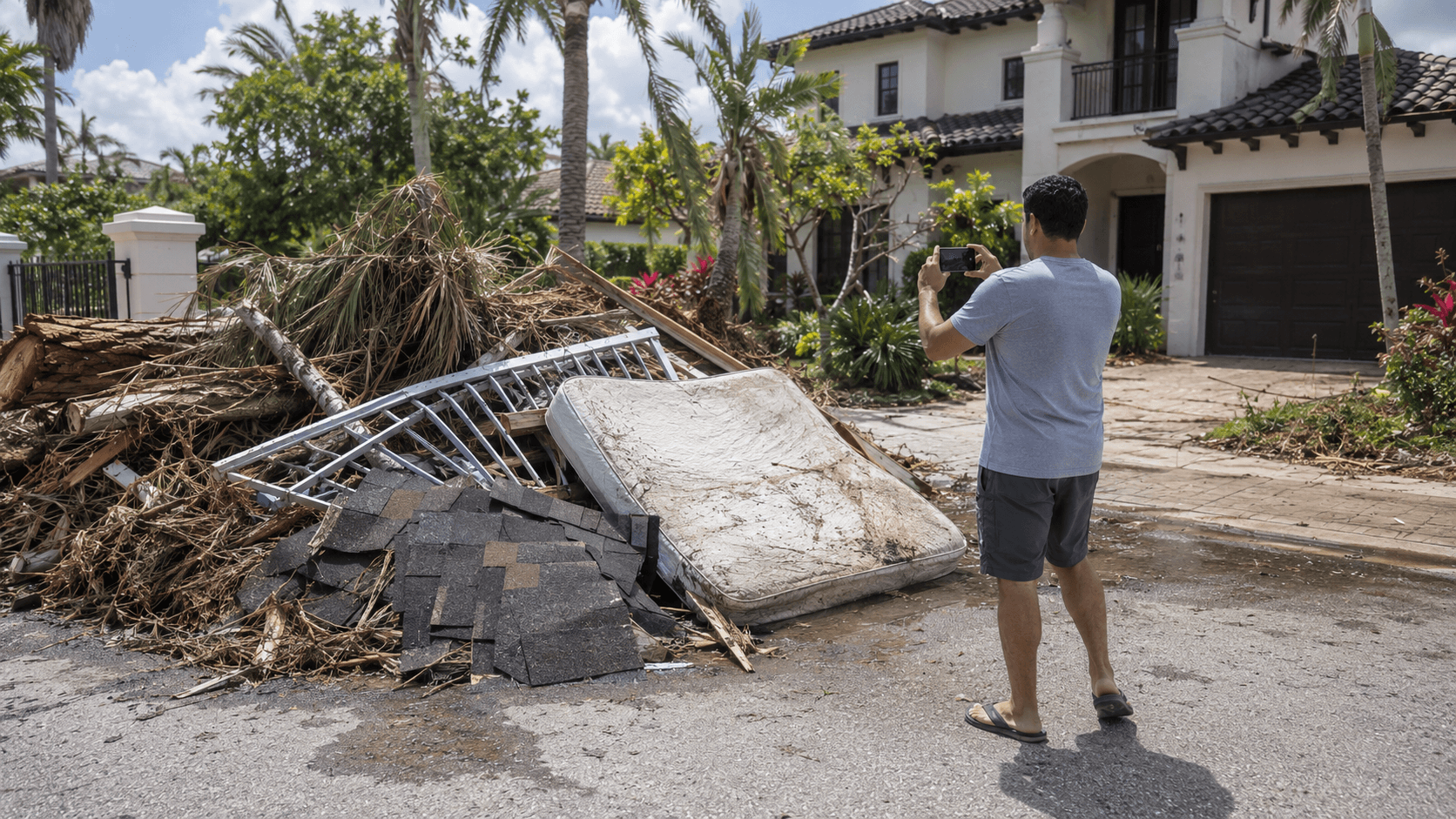
After a hurricane, your yard looks like a small-scale disaster area. Palm fronds and coconuts on the lawn. Section of a neighbor's fence in your pool. Tree limbs draped over the driveway. Torn shingle bundles in the flower beds. Wet drywall stacked at the curb. Damaged furniture pulled from the home during initial mitigation. Broken glass from the shattered window.
The impulse for most homeowners is to start cleaning up immediately. That impulse is often wrong. What you throw out, what you photograph, what you leave for the adjuster, and what you call the city about all affect the size of your insurance settlement and the timeline of your recovery.
This guide is for Miami, Fort Lauderdale, Boca Raton, and Palm Beach homeowners about to clean up after a storm. It covers what your insurance carrier expects, what your city or county handles, what to document first, and the sequence that maximizes your recovery.
The three debris categories
1. Vegetation debris. Trees, branches, palm fronds, plants. Most cities handle this through curbside pickup after major storms. 2. Construction debris. Building materials from your home — drywall, insulation, roofing, siding, fencing. Different handling depending on origin. 3. Contents debris. Furniture, appliances, personal belongings damaged by the storm.
Each category has different pickup rules, different documentation requirements, and different insurance implications.
What the city or county handles
Vegetation debris pickup: curbside pickup by contracted vendors, typically free after declared disaster. Piles at the curb, pieces under specific size and length. Construction debris pickup: sometimes included, sometimes fee-based. Varies by county. Hazardous waste: batteries, paint, chemicals, electronics — separate collection points, not curbside. Contents debris: often bulk trash pickup, sometimes scheduled.
Call your city's public works or 311 line to confirm what's happening. During major disasters, FEMA also coordinates with local governments.
What insurance covers
Homeowners insurance typically covers debris removal from your property when the debris resulted from a covered peril: trees on your property from a hurricane; contents damaged by storm water; construction debris from mitigation (drywall, insulation removed to prevent mold); debris from your damaged home now on your yard.
Sometimes not covered: neighbors' trees or debris (sometimes covered as part of your storm damage, sometimes disputed); yard cleanup unless part of restoration; landscaping restoration (limited coverage, often needs endorsement).
The specific "debris removal" line item on your policy has a modest limit — a few thousand dollars — separate from dwelling coverage. Read your policy for the number.
The documentation sequence
Before anything gets picked up or hauled away, you need documentation.
Step 1: Photograph everything. Every pile. Every damaged item. Every point where debris is on your property. Wide shots and close-ups. Timestamped. Step 2: Video walkthrough. Walk your yard describing what you see. Your voice on the timestamp makes the video evidence. Step 3: Create an itemized list. Room by room. Contents lost. Estimated values. Step 4: Save any receipts for cleanup services already engaged.
Only after documentation should anything get moved to the curb.
What to save vs. what to toss
Save (until adjuster has seen): damaged contents that might be restored; building material samples if you suspect defect claims; anything valuable or sentimental; anything the adjuster might want to inspect.
Toss (after documentation only): vegetation debris clearly beyond restoration; building material clearly waste; broken glass and hazardous materials (handle safely).
The rule: if in doubt, keep it until the adjuster has walked through.
Mitigation vs. restoration debris
Mitigation debris — material removed during immediate mitigation to prevent further damage. Wet drywall pulled during the first 24 hours to stop mold. Sagging ceiling that had to come down. Covered as mitigation under "reasonable steps."
Restoration debris — material removed during the actual restoration project. Cabinet replaced. Flooring that couldn't be saved. Covered as part of the restoration scope.
Both are covered but documented and paid differently.
Contractor debris and the AOB question
If you hire a restoration company or contractor to handle debris cleanup, watch for AOB (Assignment of Benefits) language. Some contractors include AOB language that assigns your insurance rights to them. Never sign anything that assigns your insurance benefits to a contractor. Ever. Even for something as small as debris removal.
Contents claims vs. building claims
Your policy has separate limits for building damage and contents damage. Debris removal for damaged contents falls under contents coverage. Debris from the building falls under dwelling coverage. Getting this categorization right matters. A homeowner filing a $50K building damage claim who forgets to file a $20K contents claim leaves money on the table.
The special case of neighbor debris
Trees or debris from a neighbor's property that lands on yours: if the tree fell during the storm (not due to negligence), typically covered by your insurance subject to your deductible. Even though the tree isn't yours. If the tree was already dead or dying (documented before the storm), may be covered by neighbor's insurance. If it damaged your fence or structure, covered by your insurance.
Don't argue with neighbors over storm debris. Both insurers should handle it.
When to call RestoFlo
If your South Florida home suffered hurricane damage and you're trying to sort out debris removal from restoration scope, or if you need a restoration company on the ground for documentation before cleanup, call us. We coordinate with insurance adjusters, document everything properly, work directly with your carrier without AOBs, and handle the restoration scope from mitigation through reconstruction. 24/7 emergency line: (754) 289-4815.