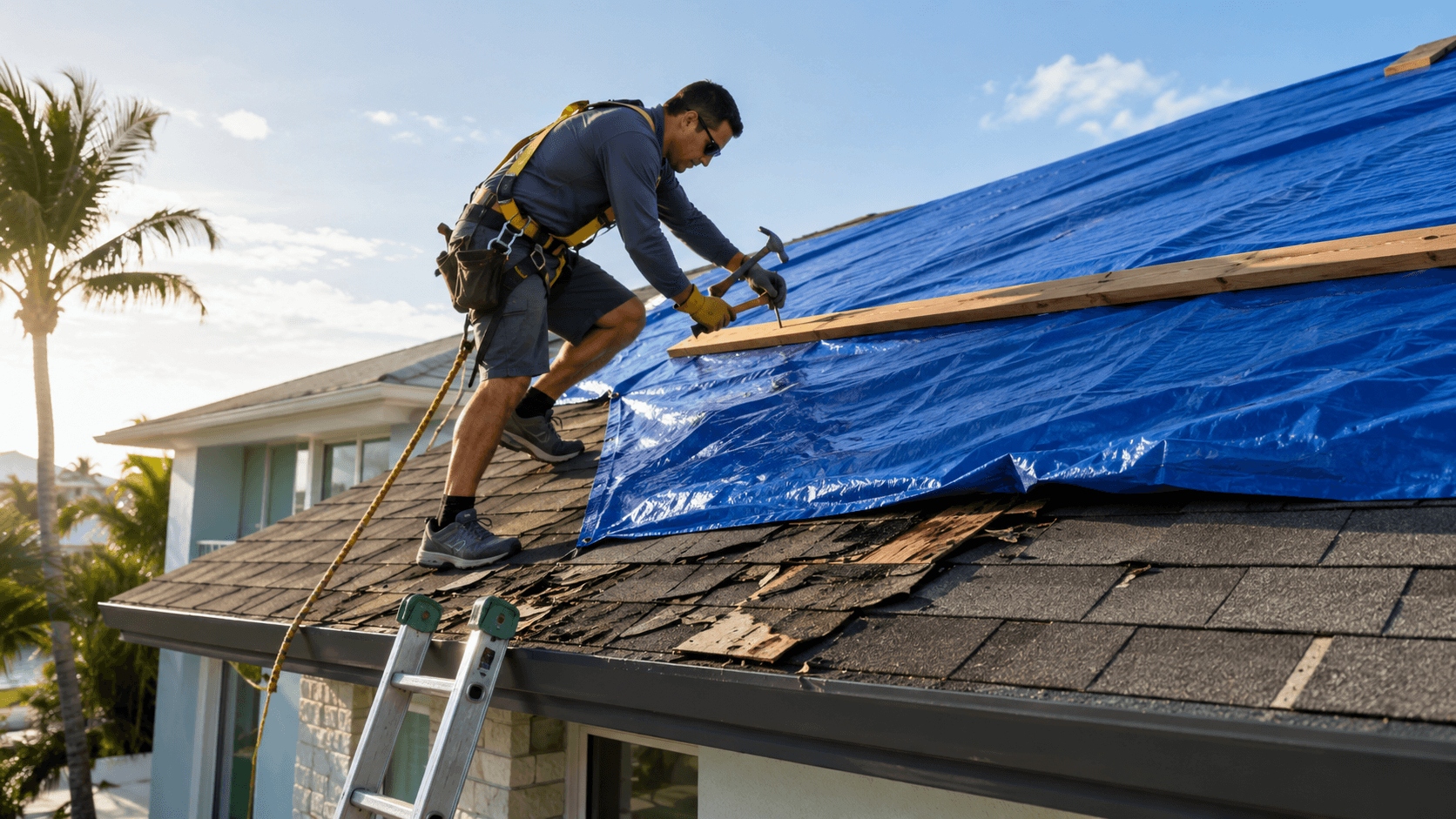
The first 24 hours after a hurricane decide whether a damaged roof becomes a $5,000 repair or a $50,000 mold remediation. Every hour of rain through a roof breach soaks insulation, runs down rafters into wall cavities, and sets up the perfect 80°F humid environment that grows mold within 48 hours in South Florida. The single most effective post-storm mitigation step a homeowner can take is to get a tarp over the breach — fast.
This guide is for Miami, Fort Lauderdale, Boca Raton, and Palm Beach homeowners facing a damaged roof after a storm. It covers when to tarp yourself versus when to call a pro, the materials that actually work, the right attachment method, and the safety rules that prevent the second-most-common post-storm injury.
When to tarp yourself vs. call a pro
Tarp yourself if the damage is small (a few square feet, not whole sections); you can access the area from a stable ladder on level ground; the roof pitch is moderate (under 6/12); you have someone to spot you from below; it's daylight and the weather has cleared; you have the materials and the physical ability.
Call a pro if the damage covers more than a small area; the roof is steep (above 6/12); the damage is near the edge of the roof; structural members are visibly compromised; you're not comfortable on a ladder or roof; rain is ongoing or returning; the roof has multiple damage zones.
For most South Florida homes, a single small puncture from debris is DIY-able. Larger damage is professional. A reputable restoration company or roofer can typically tarp same-day after a storm for $300–$800.
What you actually need
Tarp: heavy-duty silver/blue poly tarp, at least 6 mil thick. Minimum size: 4 feet larger than the damage zone in every direction. Furring strips (1×3 or 2×4 lumber) used to anchor the tarp edges. Galvanized roofing nails or screws, 2 inches or longer. Cap nails or roofing washers to prevent the tarp from tearing through. Hammer or impact driver, stable extension ladder, roofing harness, gloves, non-slip shoes, roof cement. Buy all of this before storm season — supplies sell out fast after a storm.
The 8-step tarping process
1. Assess the damage from the ground first. Photograph everything for insurance before you start. 2. Plan tarp placement — tarp must extend at least 4 feet beyond the damage in every direction, and drape over the ridge if damage is near the top so water runs off. 3. Set up your ladder safely — level ground, 4-foot rule, spotter, tied off at top. 4. Climb carefully, both hands free, use a rope to pull materials up. 5. Position the tarp with the buffer required, fold lines horizontal. 6. Anchor the upper edge first — lay a furring strip across the upper edge, nail through the strip into the roof decking every 8–12 inches. The strip distributes the load and prevents the tarp from tearing at the nails. 7. Pull the tarp tight and anchor the sides and bottom with furring strips. 8. Seal the anchor points with roof cement around each nail.
What NOT to do
Don't tarp wet. Don't use undersized tarps. Don't nail directly through the tarp without furring strips. Don't tarp during high winds. Don't ignore the ridge if damage is near the top. Don't use duct tape as your only attachment. Don't climb a damaged roof if you suspect structural failure. Don't tarp in the rain.
Safety considerations
Falls from roofs are the second-most-common post-hurricane injury (after CO poisoning). Use a roofing harness on any roof above 4/12 pitch. Wear non-slip roofing shoes. Never tarp alone. Don't work near downed power lines (25-foot clearance). Test weakened structure with weight carefully. Daylight only. Take breaks — heat, dehydration, and adrenaline cause judgment errors that lead to falls.
When a tarp is just a stop-gap
A tarp is a temporary measure. It buys you 7–30 days while you arrange permanent roof repair. After the tarp is on: call your insurance carrier and open a claim, photograph the tarp installation; get a roofing estimate; schedule permanent repair within 30 days; inspect the interior for water damage; document everything for insurance.
If significant water entered before the tarp, you're now in restoration territory. Call a restoration company immediately. The 48-hour mold window is real in South Florida.
Insurance considerations
Florida homeowners insurance: tarp materials and labor are typically covered as "reasonable steps" mitigation (save receipts); permanent roof repair from a covered storm is typically covered; interior damage from water that entered before tarping is typically covered; damage that continued because you didn't tarp can be denied as failure to mitigate.
When to call RestoFlo
If your South Florida home has roof damage from a hurricane that's letting water in, or if you've tarped temporarily and now need restoration scope assessment for interior damage, call us. We respond 24/7, document everything for your insurance carrier, work directly with them without AOBs, and coordinate with roofing professionals for permanent repair. 24/7 emergency line: (754) 289-4815.