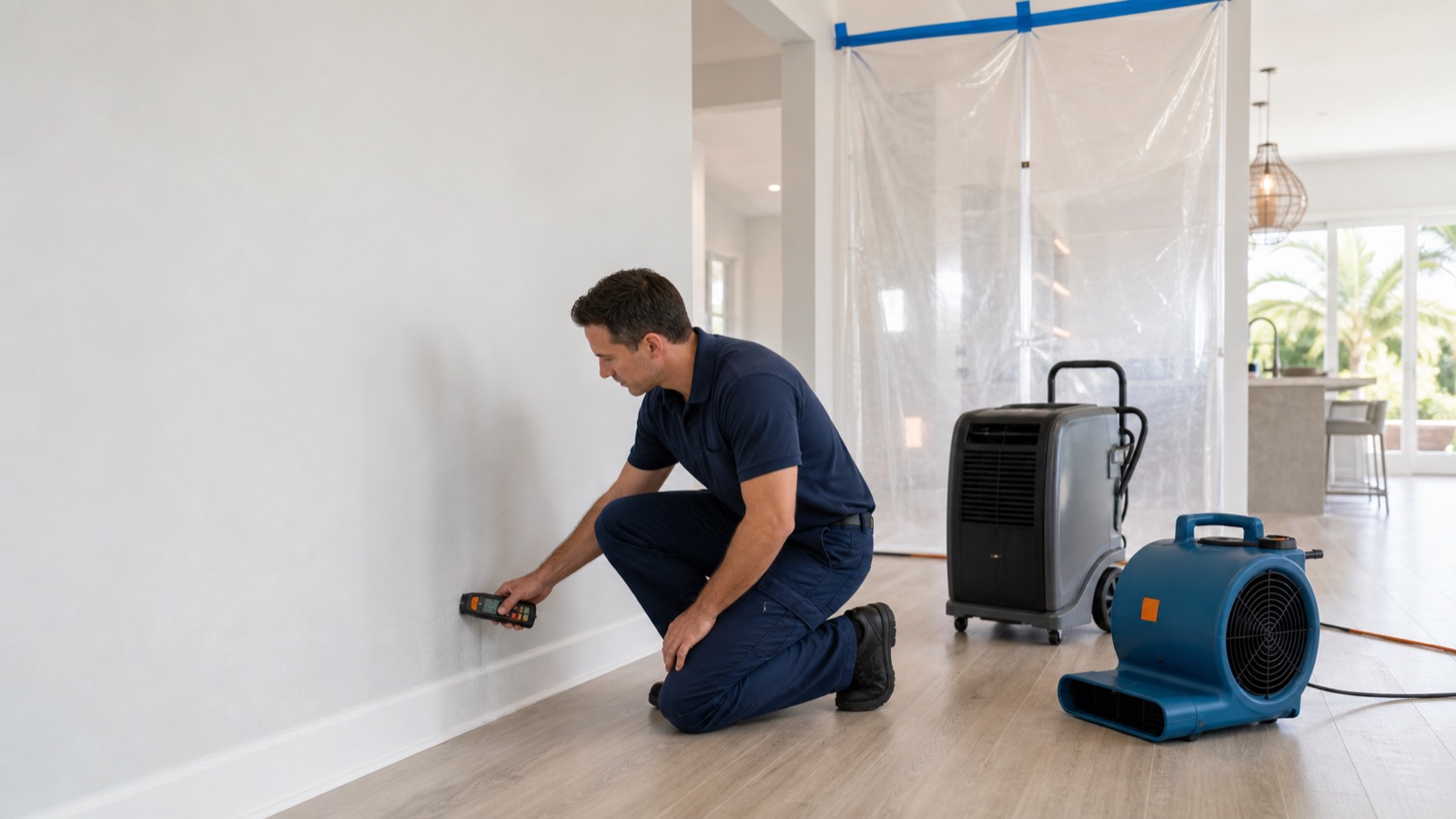
Most mold-remediation projects take about 2–5 days, according to RestoFlo’s current service-page guidance, but that is a general range—not a guarantee. A small, accessible area with a corrected moisture source may move faster. A larger or concealed problem can take longer when additional containment, material removal, drying, testing, or reconstruction is required.
In South Florida, humidity and recurring moisture can complicate the schedule. The team must identify what is wet, control the source, prevent cross-contamination, remove or clean affected materials, and confirm that the work area is ready for the next step. Skipping one of those stages to save time can leave the underlying moisture problem unresolved.
A typical sequence is assessment and source control, containment, removal and cleaning, drying and monitoring, then project-specific verification and reconstruction. Some stages overlap, and the property may not need every step described below. The final plan should be based on the affected materials, access, contamination conditions, and the agreed scope—not a one-size-fits-all calendar.
How long does mold remediation take?
For many residential projects, the active remediation portion falls within the website-stated 2–5 day range. That can include preparing containment, removing unsalvageable porous materials, cleaning remaining surfaces, operating drying or air-control equipment, and documenting progress. The range is most realistic when the affected area is limited, accessible, and no longer receiving moisture from a leak, condensation issue, or other source.
“Remediation time” and “total project time” are not always the same. Independent testing, laboratory turnaround, demolition beyond the original scope, permits, specialty trades, material ordering, or reconstruction can add days or weeks after the active remediation work. Ask which milestones are included in the proposed timeline so you know whether the estimate covers remediation only or the full path through repairs.
Step 1: Assessment and moisture-source control — often Day 0–1
The first step is defining the affected area and finding the moisture that allowed mold to grow. That may involve a visual assessment, moisture readings, checking nearby building materials, and reviewing recent leaks, appliance failures, roof or plumbing concerns, or air-conditioning condensation. The goal is to understand what must be contained and removed without disturbing unaffected areas unnecessarily.
The moisture source must also be stopped or controlled. A plumbing repair, roof repair, drainage correction, or HVAC service may require a separate qualified trade. If active water is still entering the area, the remediation schedule may pause or expand because cleaning alone will not correct the condition that supported the growth.
Step 2: Containment and the work plan — often Day 1
Containment helps isolate the work area while affected materials are handled. Depending on the scope, the setup may include protective barriers, controlled access, and air-management equipment. The exact approach should match the size and location of the affected area rather than relying on a dramatic, one-size-fits-all setup.
Before removal begins, the team should confirm access, protection for nearby contents, the materials being addressed, and how debris will leave the property. Condominiums, occupied homes, commercial spaces, and areas near shared HVAC pathways may require additional coordination. Those details can add preparation time, but they help keep the work organized and reduce avoidable disruption.
Step 3: Remove affected materials and clean remaining surfaces — often Day 1–3
Porous materials that cannot be effectively cleaned may need controlled removal, while suitable remaining surfaces may be cleaned according to the project plan. The team may also use air-control and filtration equipment during the work. The duration depends on how much material is affected, whether growth is concealed behind finishes, how easily the area can be reached, and whether the initial scope changes once assemblies are opened.
Step 4: Dry and monitor the affected area — often Day 2–5 or longer
Drying time is driven by measurements, not the calendar alone. Dehumidification and air movement may be used when appropriate, and moisture conditions should be monitored as the project progresses. Dense materials, limited airflow, high ambient humidity, or moisture trapped beneath flooring or behind built-ins can make this stage longer than expected.
South Florida’s outdoor humidity can affect drying conditions, especially when doors, windows, or building systems introduce moist air. Equipment should remain in place only as long as the project requires, and the work area should not be closed up simply because it looks dry. Documented readings help determine when materials are ready for the next step.
Step 5: Verification and reconstruction — project-dependent
The final remediation step may include a visual review, moisture confirmation, and other verification required by the scope. Independent post-remediation testing may be requested or required in some projects, but it is not automatically necessary for every situation. Once the area is ready, drywall, paint, flooring, cabinets, or other finishes may still need reconstruction; that repair schedule is separate from the active remediation range.
What can extend mold remediation beyond five days?
Common delay factors include a large or concealed affected area, an unresolved moisture source, contamination inside wall or ceiling cavities, difficult access, wet structural materials, contents that must be moved, shared building systems, and additional areas discovered during removal. Testing requirements, laboratory turnaround, permits, weather, specialty trades, and insurer decisions can also affect the broader project schedule.
A longer timeline does not automatically mean the project is going badly. It may mean the team found wet materials that need more drying, expanded containment to match verified conditions, or coordinated another repair before closing the area. Ask for milestone updates: what has been completed, what measurements or observations remain, what changed in the scope, and what must happen before reconstruction can begin.
Do you need to leave your home during mold remediation?
Not always. The decision depends on the affected area, the work methods, access to unaffected living space, the condition of building systems, and the needs of the occupants. A localized project may allow normal use of much of the property, while a larger project may make temporary relocation more practical. Follow the project team’s site-specific safety guidance, and people with health concerns should consult a qualified healthcare professional.
Does mold remediation include reconstruction?
Not necessarily. Once remediation is complete, drywall, paint, flooring, cabinets, or other finishes may still need reconstruction. That repair schedule is separate from the active remediation range.
When should you call RestoFlo?
Call when you see suspected mold, notice persistent musty odors, or discover moisture that may have reached walls, ceilings, flooring, or cabinets. RestoFlo can assess the visible conditions, map moisture, explain the likely work stages, and prepare a project-specific scope. Call (754) 289-4815 or request a free assessment through RestoFlo.com. Timelines and outcomes depend on the verified site conditions.
Related RestoFlo resources
Mold RemediationWater Damage RestorationLeak DetectionRequest a Free Assessment